
How to Spy on Your Competitors’ Email Marketing Strategy in 2026
Learn how to spy on your competitors’ email marketing strategy in 2026. Discover how to analyze their subject lines, content, offers, frequency, automation, CTAs, and tools to improve your own email campaigns.
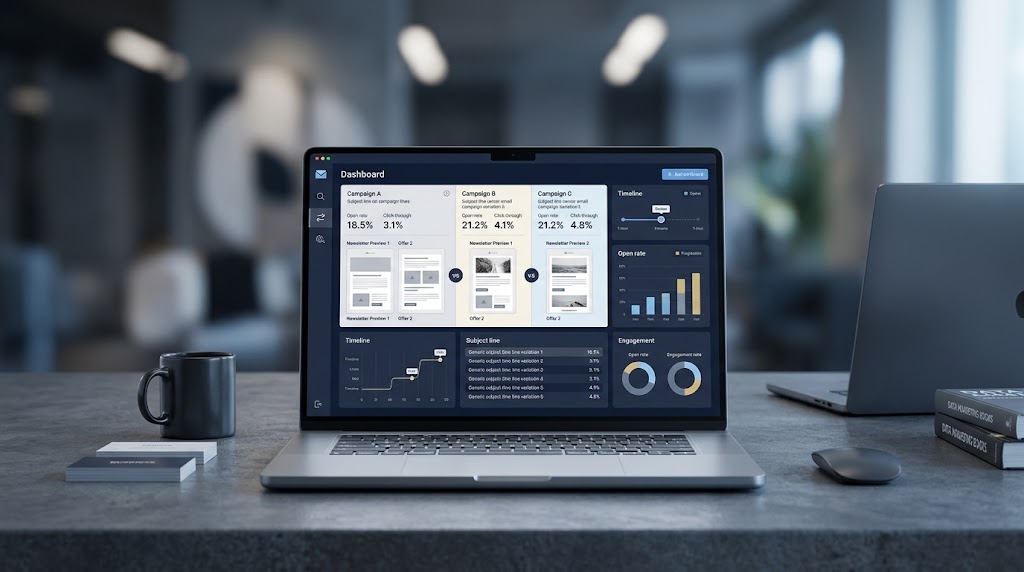
Your competitors are already sending emails to the same audience you want to reach. Their newsletters, promotions, welcome sequences, subject lines, and calls to action can reveal valuable information about what works in your industry.
That does not mean you should copy their emails. Instead, you can use competitor email marketing analysis to understand their approach, identify gaps, discover new ideas, and build a stronger strategy of your own.
The good news is that you can learn a lot without accessing private customer data or confidential campaign metrics. By subscribing to public newsletters, studying email archives, monitoring campaign patterns, and analyzing visible marketing tactics, you can build a useful picture of how competitors approach email marketing.
In this guide, you’ll learn how to spy on your competitors’ email marketing strategy in 2026, what to look for in competitor emails, which tools can help, and how to turn your findings into better email campaigns.
Why Spy on Your Competitors’ Email Marketing?
A strong email marketing strategy should not be created in isolation. Your audience is also receiving messages from competing brands, and those messages influence what subscribers expect from your industry.
A competitor email marketing analysis helps you understand those expectations.
You can use competitor research to:
- Discover new email marketing ideas
- Identify popular content and campaign formats
- Compare email frequency and timing
- Analyze competitor subject lines
- Study offers and promotions
- Find opportunities your competitors are missing
- Improve your calls to action
- Discover personalization and segmentation patterns
- Understand how competitors move subscribers from email to landing pages
The goal is not to become a copycat. The goal is to understand the competitive environment and use those insights to make smarter decisions.
For example, if three competitors are sending educational newsletters while another relies almost entirely on discounts, that difference can reveal an opportunity for your brand to position itself differently.
What Can You Learn From a Competitor’s Email Marketing Strategy?
Before you start tracking competitors, know exactly what you are looking for. Randomly collecting emails can create a large archive without producing useful insights.
Focus on the following areas.
Email Frequency and Timing
Track how often competitors send emails and when those emails arrive.
A competitor might send:
- One newsletter every week
- Several promotional emails each week
- More messages during product launches
- Extra campaigns around holidays
- Automated emails after specific customer actions
Do not assume that sending more emails is automatically better. Instead, look for patterns.
Record the date, time, campaign type, and message purpose for every email you collect. Over several weeks, you may start seeing a clear competitor email strategy.
Subject Lines and Preheaders
Subject lines are one of the easiest elements to analyze because they are immediately visible.
Look for recurring patterns such as:
- Questions
- Numbers
- Urgency
- Curiosity
- Personalization
- Discounts
- New product announcements
- Seasonal messaging
- Short, direct statements
Also pay attention to the preheader text. The subject line and preheader often work together to create the reason to open an email.
Do not simply copy a competitor's wording. Instead, identify the underlying formula and test a different version for your own audience.
Email Content and Messaging
Analyze what competitors actually talk about.
Are their emails mostly:
- Promotional?
- Educational?
- Product-focused?
- Story-driven?
- Customer-focused?
- Announcement-based?
- Curated content?
Also examine their tone of voice. A SaaS company might use educational content and product updates, while an ecommerce brand may rely more heavily on product launches, seasonal promotions, and limited-time offers.
Understanding these patterns can help you identify where your own content strategy can stand apart.
Email Design and Layout
Visual design can reveal how a competitor wants subscribers to interact with an email.
Look at:
- Header design
- Image usage
- Text-to-image balance
- Button placement
- CTA size
- Product presentation
- Typography
- Mobile-friendly layout
- Use of white space
- Overall visual hierarchy
For additional design inspiration, you can browse Really Good Emails, which curates real email campaigns and organizes them for marketers and designers to study.
Calls to Action and Offers
Your competitor's CTA can tell you what action they want the subscriber to take.
Record whether they use CTAs such as:
- Shop Now
- Learn More
- Start Free
- Get the Offer
- Book a Demo
- Download Now
- Read More
- Claim Your Discount
Then analyze the offer behind the CTA.
Are competitors promoting free trials, discounts, free shipping, limited releases, webinars, ebooks, or product bundles?
The objective is not to copy the offer. Instead, determine what type of value proposition appears repeatedly in your market.
Personalization and Segmentation Signals
You cannot see a competitor's private segmentation rules, but you can observe signals that suggest personalization.
For example, you may notice:
- First-name personalization
- Product recommendations
- Location-based content
- Different offers after specific actions
- Abandoned-cart emails
- Welcome sequences
- Re-engagement campaigns
- Post-purchase messages
This is particularly useful because modern email marketing depends heavily on sending relevant messages to specific audience segments.
If you want to apply similar principles to your own campaigns, Mailsnappy provides audience segmentation tools for organizing subscribers and creating more targeted campaigns.
How to Spy on Your Competitors’ Email Marketing Strategy
Now let's turn the research into a practical process.
1. Identify Your Top Email Marketing Competitors
Start with three to five competitors rather than trying to monitor every company in your industry.
Choose businesses that:
- Target a similar audience
- Sell similar products or services
- Compete for the same customers
- Have active email marketing
- Have a visible newsletter signup process
You can also include one or two aspirational brands that are not direct competitors but have particularly strong email marketing.
This gives you a useful comparison group without making your research unnecessarily complicated.
2. Subscribe to Their Email Lists
The simplest way to monitor competitor emails is to become a subscriber.
Visit each competitor's website and look for:
- Newsletter forms
- Exit-intent popups
- Discounts for new subscribers
- Lead magnets
- Account signup emails
- Product updates
Use a dedicated research inbox rather than mixing competitor emails with your personal or business inbox.
This also makes it easier to organize messages by competitor and track their sending patterns over time.
3. Analyze Their Welcome Email
The welcome email is one of the most useful messages to study because it shows how a company introduces itself to new subscribers.
Record:
- Subject line
- Preheader
- Welcome offer
- Brand introduction
- Main CTA
- Design
- Links
- Follow-up timing
Then watch what happens next.
Does the company send another email the next day? Does it introduce products? Does it provide educational content? Does it offer a discount?
This can reveal the structure of a competitor's email welcome sequence.
4. Track Email Frequency and Timing
Create a simple spreadsheet and record every email you receive.
Useful columns include:
DateCompetitorSubject LineEmail TypeOfferCTANotesAug. 5Brand AExample subjectPromotion20% offShop NowProduct-heavyAug. 7Brand BExample subjectNewsletterNoneRead MoreEducationalAfter 30 days, you will have much more useful information than you would from looking at one or two emails.
A longer observation period can reveal recurring promotional cycles, campaign frequency, seasonal messaging, and automated sequences.
5. Study Competitor Email Subject Lines
Create a separate list of competitor subject lines.
Group them by approach:
Urgency:
“Last chance to save”
Curiosity:
“You might want to see this”
Promotion:
“20% off ends tonight”
Product launch:
“Meet our newest collection”
Educational:
“5 ways to improve your…”
Then ask:
Which patterns are competitors using repeatedly, and which ones are they ignoring?
That second question is particularly valuable because a gap can become an opportunity for your own testing.
6. Analyze Their Email Content
Read competitor emails as a customer rather than just a marketer.
Ask:
- What problem is the email solving?
- What is the main message?
- Who is the intended audience?
- What emotion is the email trying to create?
- How much space is dedicated to selling?
- What value does the subscriber receive?
- Is the CTA obvious?
This helps you move beyond surface-level competitor email research.
Instead of saying, “Their email looks good,” you can say, “Their email uses a single product benefit, supports it with social proof, and finishes with one prominent CTA.”
That is a much more useful insight.
7. Examine Their Email Design
Look at the email from top to bottom.
Identify the visual hierarchy:
Headline → Supporting message → Product/value proposition → CTA
Check whether the design makes the next action obvious.
You can also compare competitors with curated email examples from Really Good Emails, which provides a large collection of real-world email designs and campaign examples.
8. Analyze Their Offers and CTAs
Offers often reveal what competitors believe will motivate their audience.
Track:
- Percentage discounts
- Dollar discounts
- Free shipping
- Free trials
- Bundles
- Limited-time promotions
- Early access
- Exclusive access
- Seasonal offers
Then compare the CTA.
For example, two competitors may offer similar discounts but use completely different CTA language. That difference can be worth testing in your own campaigns.
9. Look for Segmentation and Automation Signals
You may not know exactly how a competitor has segmented its database, but customer journeys can reveal clues.
Subscribe to different forms or interact with publicly available customer journeys when appropriate.
You might receive:
- Welcome email
- Educational email
- Product recommendation
- Promotional campaign
- Reminder
- Re-engagement email
These patterns can reveal how a company uses email marketing automation to move subscribers through a customer journey.
You can build similar automated journeys for your own audience using email automation and tailor messages based on subscriber behavior.
10. Follow the Email-to-Landing-Page Journey
Do not stop your analysis when the email ends.
Click the CTA and study the next step.
Look at:
- Landing-page headline
- Offer consistency
- CTA
- Product positioning
- Form length
- Trust signals
- Social proof
- Overall user experience
Ask whether the landing page delivers what the email promised.
This creates a much more complete email marketing competitive analysis because you are analyzing the journey rather than one isolated message.
Best Tools to Spy on Competitors’ Email Marketing
You do not always need expensive software. A dedicated research inbox and spreadsheet can be enough for a small competitor set.
However, specialized tools can make research faster.
Milled
Milled is a searchable database of ecommerce marketing emails. It allows marketers to discover campaigns, search brands, follow brands, and study historical email examples. Its current site says it indexes millions of emails from tens of thousands of ecommerce brands.
It can be particularly useful when you want to research historical campaigns without waiting for a competitor to send a new email.
Really Good Emails
Really Good Emails is especially useful for studying email design, layout, hierarchy, and campaign inspiration. Its curated gallery is designed around browsing and studying real email campaigns.
SendView
SendView focuses specifically on competitor email monitoring. Its platform can track competitor campaigns, compare sending patterns, view timelines, and identify trends across senders.
Manual Competitor Email Tracking
For small businesses, manual research can still be effective.
Use:
- A dedicated inbox
- A spreadsheet
- Screenshots
- Email folders
- A monthly review
The advantage is that you can focus on a small number of competitors and analyze their messages deeply rather than collecting large amounts of data without acting on it.
How to Create a Competitor Email Marketing Analysis
Once you have collected enough emails, turn your research into a structured analysis.
Create a spreadsheet with these columns:
CompetitorEmail DateSubject LineEmail TypeFrequencyOfferCTAPersonalizationDesignKey InsightYou can also score each competitor from 1–5 for:
- Subject lines
- Content
- Design
- Offers
- CTAs
- Personalization
- Automation
- Overall customer experience
After scoring three to five competitors, look for patterns.
Use a SWOT Framework
A simple SWOT analysis can make competitor email research easier to act on.
Strengths: What do competitors do particularly well?
Weaknesses: Where are their emails repetitive, unclear, or poorly targeted?
Opportunities: What audience needs or content formats are competitors ignoring?
Threats: What tactics could increase competition for your subscribers' attention?
This turns competitor email analysis from passive research into an actionable marketing plan.
How to Turn Competitor Insights Into Your Own Email Strategy
Research only becomes valuable when you use it to improve your own campaigns.
Don't Copy — Adapt
If a competitor uses a successful subject-line formula, do not reproduce the same wording.
Instead, understand why it works and create your own version.
If they use urgency, you might test scarcity.
If they use discounts, you might test a value-focused offer.
If they use educational content, you might provide a more practical guide.
The goal is differentiation.
Find Gaps Your Competitors Miss
Look for unanswered questions, underserved segments, weak content, poor CTAs, or repetitive promotions.
For example, if every competitor sends discount-heavy emails, an educational email series may help your brand stand out.
If competitors send generic newsletters, better email segmentation may give you a competitive advantage.
Mailsnappy's segmentation tools can help organize subscribers into more targeted groups.
Test What You Learn
Never assume that a competitor's tactic will automatically work for your audience.
Use A/B testing and campaign analytics to validate your ideas.
Track:
- Opens
- Clicks
- Conversions
- Unsubscribes
- Engagement
- Revenue where applicable
Mailsnappy provides email campaign analytics to help marketers monitor campaign performance and use results to improve future emails.
What You Should NOT Do When Spying on Competitors
Ethical competitor research should focus on information that is publicly available or legitimately available to you as a subscriber.
Do not:
- Attempt to access private customer data
- Hack competitor systems
- Steal subscriber lists
- Impersonate another company
- Copy proprietary email content word-for-word
- Attempt to obtain private campaign metrics
- Scrape information that you are not authorized to access
Subscribing to a public newsletter and analyzing what appears in your own inbox is very different from trying to access a competitor's private systems.
You should also follow the laws and rules that apply to your own email marketing. For businesses sending commercial email in the United States, the FTC's CAN-SPAM compliance guide explains requirements around accurate headers, non-deceptive subject lines, identification, physical addresses, and opt-out mechanisms.
If you operate internationally, review the privacy and marketing requirements that apply to the countries where you send email.
How Often Should You Monitor Competitors’ Emails?
You do not need to analyze competitor emails every day.
A practical schedule is:
Weekly: Collect new emails and record important patterns.
Monthly: Compare frequency, content, offers, and subject lines.
Quarterly: Perform a deeper competitor email marketing analysis and update your strategy.
For seasonal businesses, add extra monitoring before major shopping periods, product launches, holidays, or industry events.
The longer you observe a competitor, the easier it becomes to distinguish a one-off campaign from a genuine strategy.
Competitor Email Marketing Analysis Checklist
Use this checklist whenever you review a competitor email:
Identify the competitor
Record the send date and time
Save the subject line
Analyze the preheader
Identify the email type
Review the main message
Analyze the offer
Record the CTA
Study the design
Look for personalization
Look for automation signals
Follow the landing-page journey
Record the main insight
Identify an opportunity for your brand
Create a test based on the insight
FAQs About Competitor Email Marketing Analysis
Is it legal to spy on a competitor's email marketing?
The term “spy” can sound more aggressive than the actual process. Ethical competitor research generally means subscribing to public newsletters, reviewing publicly available email archives, and analyzing observable marketing tactics. It should not involve hacking, accessing private systems, or obtaining confidential customer information.
Can I see my competitors' email open rates?
Usually, no. A competitor's private open rates, click rates, conversions, and revenue are not publicly available simply because you received their email. You can analyze observable signals such as content, frequency, subject lines, CTAs, and offers, but you should not assume you know their actual performance.
How can I track competitor email campaigns?
For a small number of competitors, subscribe to their newsletters using a dedicated research inbox and record every campaign in a spreadsheet. For larger-scale monitoring, tools such as Milled and SendView can help you research or track competitor campaigns.
What is the best tool for competitor email analysis?
It depends on your goal. Milled is useful for searching ecommerce email campaigns and historical examples, Really Good Emails is strong for design inspiration, and SendView focuses on monitoring specific competitor email programs.
How long should I monitor competitors?
At least 30 days gives you a useful starting point. Monitoring for 60–90 days can reveal recurring campaigns, seasonal patterns, frequency changes, and automated sequences that are difficult to identify from only a few emails.
Should I copy my competitors' email strategy?
No. Competitor research should help you understand what other brands are doing, not duplicate their work. Use their strategies as research inputs, identify gaps, and develop your own messaging, offers, design, and customer experience.
Final Thoughts
Learning how to spy on your competitors' email marketing strategy does not require hacking, secret data, or complicated technology.
Start with a small group of competitors. Subscribe to their newsletters, monitor their email frequency, study their subject lines, analyze their content and design, follow their CTAs, and document everything in a simple competitor analysis spreadsheet.
Then turn those observations into experiments.
The most valuable insight is not “What are my competitors doing?”
It is:
“What can I learn from what they are doing, and how can I do it better for my audience?”
Once you have identified the opportunities, use the right tools to build, automate, segment, and measure your own campaigns. With Mailsnappy's email marketing platform, you can create professional campaigns, manage your audience, automate customer journeys, personalize emails, and track campaign performance from one platform.