
How to Choose Email Marketing Software: A Complete Guide for Businesses
Learn how to choose the right email marketing software by comparing automation, email templates, segmentation, analytics, integrations, pricing, AI features, and scalability.
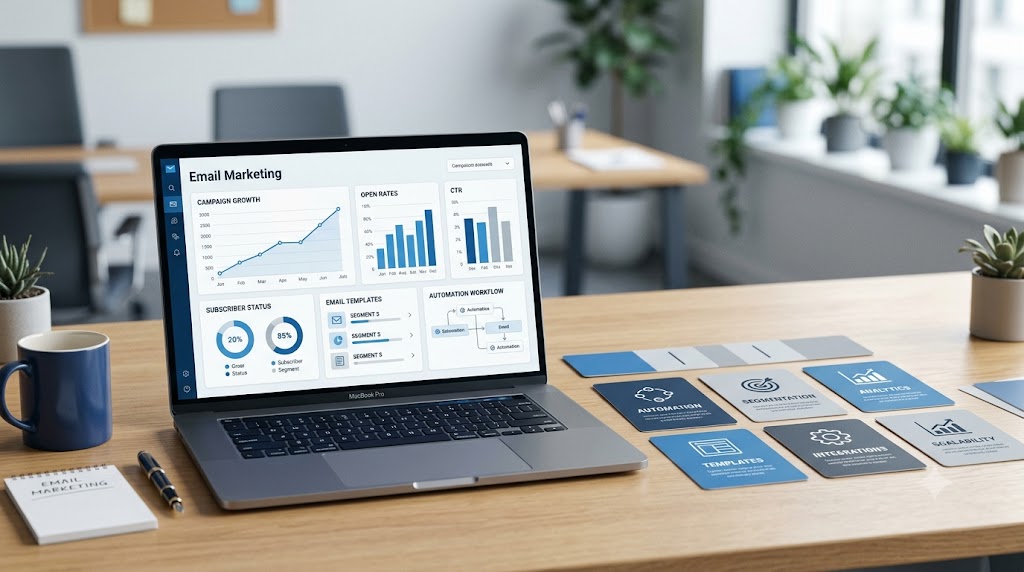
Choosing the right email marketing software can make a major difference in how effectively your business communicates with customers. The right platform can help you build email campaigns, automate repetitive tasks, organize subscribers, personalize messages, and understand what is actually working.
But with so many email marketing platforms available, choosing one can quickly become confusing. Some tools are designed for beginners, while others focus heavily on automation, advanced analytics, ecommerce, or large marketing teams.
The best email marketing software is not necessarily the platform with the most features. It is the one that fits your business needs, budget, audience size, technical requirements, and future growth.
In this guide, we will explain how to choose email marketing software and the key features you should compare before making a decision.
What Is Email Marketing Software?
Email marketing software is a platform that businesses use to create, send, manage, and measure email campaigns.
Instead of manually sending individual emails, businesses can use an email marketing platform to manage subscriber lists, create newsletters, schedule campaigns, automate follow ups, segment audiences, and track results.
Modern email marketing software can also include features such as AI assisted content creation, personalization, landing pages, signup forms, integrations, and detailed campaign reporting.
For businesses that rely on email to generate leads, nurture customers, or drive sales, choosing the right platform can save time and make campaigns easier to manage.
Why Choosing the Right Email Marketing Software Matters
Your email marketing platform becomes part of your everyday marketing workflow. If it is difficult to use, lacks important features, or becomes too expensive as your audience grows, switching platforms later can be frustrating.
A good email marketing tool should make it easier to manage your subscribers and campaigns rather than create additional work.
The right platform can help you:
- Build and manage email lists
- Create professional email campaigns
- Automate repetitive marketing tasks
- Segment subscribers based on their interests or behavior
- Personalize emails
- Track campaign performance
- Improve customer engagement
- Scale your email marketing as your business grows
Before choosing a platform, think about what you actually need today and what you are likely to need six or twelve months from now.
How to Choose Email Marketing Software
There is no single email marketing platform that is perfect for every business. The best way to choose one is to compare the features that directly affect your marketing goals.
1. Look for an Easy to Use Email Marketing Platform
Ease of use should be one of your first considerations.
A powerful platform is not very useful if your team needs hours of training just to create a basic campaign. Look for a clean interface, intuitive campaign creation, simple list management, and an easy email editor.
Drag and drop email builders can be particularly helpful for small businesses and teams without dedicated designers or developers.
Before committing to a platform, consider whether you can create a basic campaign, import contacts, and understand the dashboard without constantly checking documentation.
2. Check Email Marketing Automation Features
Email automation allows businesses to send relevant messages automatically based on triggers, schedules, or subscriber actions.
For example, you might want to automatically send a welcome email after someone joins your list, a follow up after a purchase, or a reminder when a customer has not interacted with your business for a certain period.
When comparing email marketing software, check whether it supports automated workflows, triggers, delays, conditions, and multiple email sequences.
Businesses that want to reduce repetitive work should consider automation a core feature rather than an optional extra.
You can also explore MailSnappy Email Marketing Software to see how an email marketing platform can combine campaign management and automation in one workflow.
3. Compare Email List Management and Segmentation
Your subscriber list is one of your most valuable marketing assets, so good list management is essential.
Look for software that allows you to import contacts, organize subscribers, manage lists, and create audience segments.
Segmentation lets you send different messages to different groups instead of sending the same email to everyone.
For example, an online store might create separate segments for new customers, repeat customers, inactive subscribers, and people interested in a particular product category.
More relevant emails can lead to better engagement because subscribers receive content that is more closely aligned with their interests.
4. Evaluate Email Templates and Design Tools
Your emails need to look professional across desktops and mobile devices.
When comparing email marketing tools, check the available templates and the flexibility of the email editor. Look for responsive templates, customizable layouts, reusable sections, buttons, images, and branding options.
A good email builder should allow you to create professional campaigns without requiring coding knowledge.
It is also worth checking whether you can save your own templates for future campaigns. Reusable templates can significantly reduce the time required to create regular newsletters.
5. Look at Personalization Features
Personalization goes beyond adding a subscriber's first name to an email.
Modern email marketing platforms can use subscriber information, preferences, purchase behavior, or engagement data to create more relevant campaigns.
When evaluating software, look for features such as dynamic content, personalized fields, audience segmentation, and behavior based messaging.
The goal is to make subscribers feel like the email is relevant to them rather than receiving a generic message sent to an entire database.
6. Check Analytics and Email Marketing Reporting
You need to know whether your campaigns are producing results.
At minimum, email marketing software should provide useful reporting on metrics such as open rates, click rates, unsubscribes, and campaign activity.
More advanced platforms may provide automation reports, audience insights, conversion tracking, and comparisons between campaigns.
Do not choose a platform simply because it displays a large number of statistics. Focus on whether the reports help you make better marketing decisions.
For example, if a campaign receives many opens but very few clicks, you may need to improve your content or call to action.
7. Consider Email Deliverability
Even the best email campaign is ineffective if it does not reach the inbox.
Email deliverability refers to the ability of emails to successfully reach subscribers rather than being rejected or filtered into spam.
When choosing email marketing software, look for a provider that takes deliverability seriously and supports responsible sending practices.
Your own practices matter too. Use permission based lists, avoid misleading subject lines, remove inactive contacts when appropriate, and monitor campaign engagement.
The Federal Trade Commission provides guidance on commercial email requirements under the CAN SPAM Act, making compliance another important consideration for businesses sending marketing emails in the United States. (ftc.gov)
8. Review Email Marketing Integrations
Your email marketing platform should work well with the other tools your business already uses.
Depending on your business, useful integrations might include ecommerce platforms, websites, customer relationship management systems, forms, analytics tools, payment platforms, and other marketing software.
Before choosing a platform, make a list of the tools you currently use and check whether the email marketing software integrates with them.
An integration that saves your team from manually transferring customer information can quickly become valuable.
9. Compare Pricing and Scalability
Price is important, but the cheapest email marketing software is not always the most affordable option in the long run.
Look beyond the starting price and check how costs change as your subscriber list or email volume increases.
Compare:
- Subscriber limits
- Monthly email limits
- Automation availability
- Feature restrictions
- Additional user costs
- Premium features
- Overages
- Free plan limitations
A platform should fit your current budget without creating an unreasonable cost when your audience grows.
10. Check Customer Support
Technical problems can interrupt your campaigns, especially when you are working with automation, integrations, or large subscriber lists.
Check what support options are available before choosing an email marketing platform.
Depending on the provider, support may include email, live chat, knowledge bases, tutorials, or dedicated account assistance.
For smaller businesses, accessible support can be especially valuable because there may not be an in house email marketing specialist available to troubleshoot problems.
11. Consider AI Email Marketing Features
AI is becoming increasingly common in email marketing software.
AI features can help marketers generate subject lines, draft email copy, create variations, personalize content, or speed up repetitive content tasks.
However, AI should make your workflow easier rather than replace your marketing strategy.
When comparing AI email marketing tools, look at how the features actually fit into your workflow. A useful AI assistant can save time, but you should still review and edit generated content before sending it to customers.
If AI assisted email creation is important to your workflow, consider exploring MailSnappy's AI Email Template Generator.
Free vs Paid Email Marketing Software
Free email marketing software can be a good starting point for freelancers, startups, and small businesses with limited subscriber lists.
However, free plans often come with restrictions on subscribers, monthly email volume, automation, templates, analytics, or branding.
Paid plans usually provide more advanced features and higher limits.
Instead of choosing based only on price, consider the value you receive. If a paid platform saves several hours of manual work every month or helps you generate more sales, the additional cost may be justified.
Common Mistakes When Choosing Email Marketing Software
One of the biggest mistakes businesses make is choosing a platform based only on its number of features.
More features do not automatically mean better software.
Other common mistakes include:
- Choosing without testing the interface
- Ignoring future subscriber growth
- Focusing only on the starting price
- Not checking integrations
- Overlooking deliverability
- Ignoring automation capabilities
- Failing to review reporting features
- Choosing a platform that is too complicated for the team
The best email marketing tool should solve your problems without creating unnecessary complexity.
How to Compare Email Marketing Platforms Before You Buy
Before making a final decision, create a simple comparison checklist.
Write down your requirements for:
- Email campaigns
- Subscriber management
- Segmentation
- Automation
- Templates
- Personalization
- Analytics
- Integrations
- AI features
- Pricing
- Customer support
Then compare each platform against the same criteria.
If possible, test the software through a free trial or free plan. Create an actual campaign, import a small test list, build an automation, explore the reporting dashboard, and see how easily your team can use the platform.
This practical test can reveal problems that are difficult to identify from a feature list alone.
When Should You Switch Email Marketing Software?
Sometimes your current platform is no longer the right fit.
You may want to consider switching if your costs have increased significantly, important features are missing, automation is too limited, your team struggles with the interface, or your business has outgrown the platform.
Before switching, review your existing subscriber data, integrations, automations, templates, and historical reports. Plan the migration carefully so you do not disrupt active campaigns or lose important customer information.
Frequently Asked Questions About Email Marketing Software
What is the best email marketing software for a small business?
The best platform depends on your budget, audience size, required features, and marketing goals. Small businesses should generally prioritize ease of use, automation, list management, templates, reporting, and predictable pricing.
How much does email marketing software cost?
Pricing varies significantly between platforms. Some offer free plans, while others charge based on subscribers, email volume, features, or users. Always compare the cost at your current list size and your expected future size.
Do I need email marketing automation?
Automation is useful for most businesses because it can handle repetitive communication such as welcome emails, follow ups, reminders, and customer journeys. The amount of automation you need depends on your marketing strategy.
What features should email marketing software have?
Important features include campaign creation, list management, segmentation, automation, templates, personalization, analytics, deliverability support, integrations, and scalable pricing.
Is free email marketing software worth using?
Free software can be useful when starting out, but it may have limits. As your audience and marketing requirements grow, a paid platform may provide better automation, reporting, integrations, and scalability.
Final Thoughts
Choosing email marketing software becomes much easier when you focus on your actual business requirements rather than simply comparing feature lists.
Start by identifying your audience size, campaign frequency, automation needs, integrations, reporting requirements, and budget. Then compare platforms based on usability, features, deliverability, pricing, scalability, and support.
The right email marketing platform should make your marketing workflow simpler, help you communicate more effectively with subscribers, and give your business room to grow.
If you are evaluating your options, explore MailSnappy and compare its email marketing, automation, list management, and AI capabilities with the requirements you have identified.