
Is Email Marketing Dead in 2026 The Truth About Email Marketing
Is email marketing dead in 2026? Discover why email marketing is still effective, how automation and personalization are changing the industry, and what businesses need to do to get better results from email campaigns.
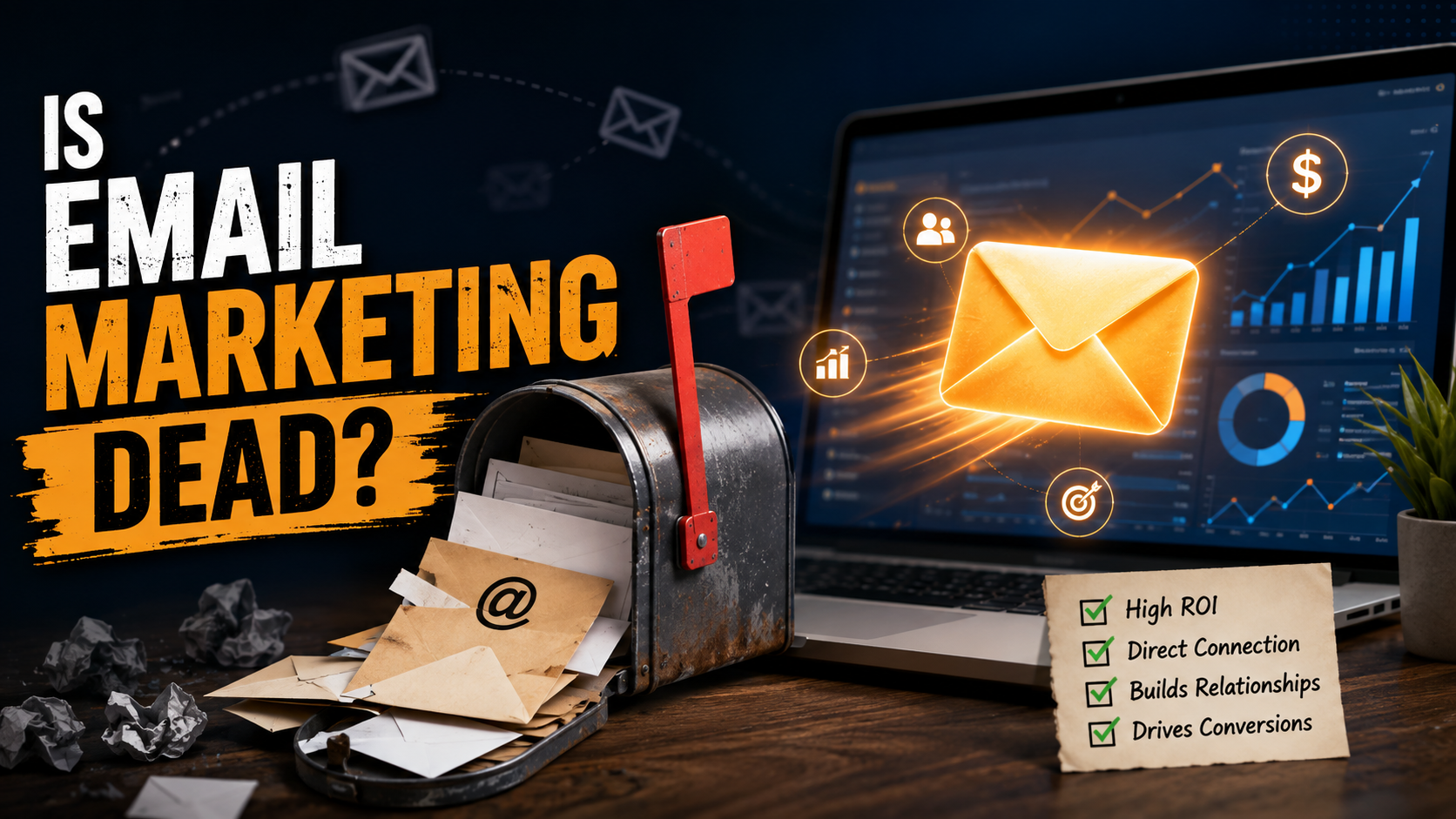
If you have been following digital marketing trends, you have probably come across one question more than once. Is email marketing dead
With social media, artificial intelligence, messaging apps, short form video and increasingly crowded inboxes, it is easy to assume that email marketing is becoming outdated. Some marketers have even started asking whether businesses should move their attention to newer marketing channels instead.
But the reality is different.
Email marketing is not dead. What is changing is the way businesses use it.
The old approach of sending the same promotional email to an entire contact list is becoming less effective. Modern businesses are using email marketing automation, segmentation, personalization and behavioral data to create more relevant experiences for their subscribers.
So the real question is not whether email marketing is dead. The real question is whether traditional email marketing is keeping up with the expectations of modern customers.
Is Email Marketing Dead in 2026
The short answer is no.
Email marketing is still an important channel for businesses that want to communicate directly with potential and existing customers. Unlike social media, where businesses often depend on algorithms to determine how much of their content reaches an audience, email gives businesses a direct communication channel with people who have chosen to subscribe.
That does not mean every email campaign will succeed.
People receive a huge number of emails every day. They ignore messages that are irrelevant, repetitive or overly promotional. They are also more aware of privacy and increasingly selective about the brands they allow into their inbox.
This is why successful email marketing in 2026 is focused on relevance rather than volume.
Google has also introduced stronger requirements for email senders. Bulk senders need proper email authentication and must follow additional requirements around spam rates and unsubscribe functionality. These changes show how important responsible sending practices have become. Google Email Sender Guidelines
Why Do People Think Email Marketing Is Dead
There are several reasons why this idea has become popular.
The first is inbox overload
People receive emails from businesses, online stores, newsletters, financial services, social platforms and other organizations. When someone sees dozens of messages every day, they naturally become more selective about what they open.
The second reason is poor email marketing
Many businesses still send the same message to everyone on their list. A new subscriber might receive the same promotion as a customer who has purchased from the company several times.
That approach makes little sense from the customers perspective.
The third reason is changing email measurement
Open rates are no longer as simple to interpret as they once were because privacy features and automated email systems can affect how opens are recorded. This means marketers need to pay more attention to meaningful actions such as clicks, conversions and revenue.
The fourth reason is deliverability
Even a great email campaign cannot generate results if the emails do not reach the inbox. Proper authentication, list quality, engagement and responsible sending practices have become essential.
Email Marketing Is Not Dead It Has Evolved
The phrase email marketing is not dead is becoming more accurate as businesses move away from outdated strategies.
Traditional email marketing usually followed a simple process.
Create one email, send it to the entire list and wait for results.
Modern email marketing works differently.
Businesses can collect subscriber information, divide audiences into relevant segments, monitor customer behavior and automatically send messages based on specific actions.
For example, someone who signs up for a newsletter can receive a welcome email. Someone who purchases a product can receive a follow up message. A customer who has not interacted with a business for several months can receive a re engagement campaign.
This is where email marketing automation becomes valuable.
Instead of manually sending every message, businesses can create workflows that respond to customer actions automatically.
Some marketers describe the current environment as email marketing on fire because businesses are finding new ways to combine automation, personalization and useful content. The channel itself has not disappeared. It has simply become more sophisticated.
Seven Reasons Email Marketing Still Works in 2026
Direct Communication With Customers
Email gives businesses a direct way to communicate with people who have willingly subscribed to their content.
This makes it useful for building relationships, educating leads, promoting products and keeping existing customers engaged.
Personalization
Modern email campaigns can be personalized based on customer interests, previous purchases, website activity and other useful information.
A customer who purchased a laptop bag, for example, might be interested in accessories rather than receiving the same promotion as someone who has never purchased anything.
Relevant communication is more likely to attract attention than generic messaging.
Automation
Automation is one of the biggest developments in modern email marketing.
Businesses can create automated workflows for welcome messages, abandoned carts, customer onboarding, product recommendations, follow up emails and re engagement campaigns.
This saves time while allowing businesses to communicate with customers at important moments.
Businesses looking for an email marketing platform can use automation tools to manage these workflows without manually sending every message.
Customer Retention
Marketing is not only about acquiring new customers.
Businesses also need to maintain relationships with existing customers. Email can help companies share useful information, product updates, educational content and relevant offers with people who already know the brand.
This makes email particularly useful for customer retention.
Measurable Results
One reason businesses continue to use email is that campaigns can be measured.
Important metrics include click through rate, conversion rate, bounce rate, unsubscribe rate, spam complaints and revenue.
Marketers should avoid judging campaign performance based only on open rates. Clicks and conversions often provide a clearer picture of whether subscribers are actually taking action.
Google also provides Postmaster Tools to help eligible senders monitor delivery related information for messages sent to Gmail users. Google Postmaster Tools
Works Across Different Industries
Email marketing is not limited to online stores.
Software companies can use email for customer onboarding. Agencies can nurture leads. Educational businesses can communicate with students. Ecommerce companies can recover abandoned carts and encourage repeat purchases.
The strategy may change depending on the industry, but email remains useful across many different business models.
Works With Other Marketing Channels
Email does not have to compete with social media or search marketing.
In fact, the strongest digital marketing strategies often use several channels together.
A customer might discover a company through social media, visit its website, subscribe through a signup form and then receive a series of useful emails before eventually becoming a customer.
This makes email an important part of the wider customer journey.
What Is Actually Hurting Email Marketing Performance
If email marketing is still effective, why do some businesses struggle to get results
The problem is usually the strategy rather than the channel.
Sending too many emails can make subscribers lose interest. Sending irrelevant content can increase unsubscribes. Poorly maintained lists can hurt deliverability. Purchased email lists can create serious problems because the people on those lists may never have agreed to receive your messages.
Businesses should instead build permission based lists and give subscribers a clear reason to stay subscribed.
Segmentation is also important.
A person who signed up yesterday should not necessarily receive the same communication as a loyal customer who has purchased from the business several times.
Subject lines also need to be honest and relevant. Misleading subject lines might generate short term clicks but can damage trust and engagement over time.
Google recommends that senders avoid deceptive subject lines and maintain good sending practices to protect recipients and sender reputation. Gmail Sender Guidelines
How AI Is Changing Email Marketing
Artificial intelligence is changing the future of email marketing, but it does not mean marketers should simply send more messages.
The real opportunity is better communication.
AI can help marketers generate email ideas, create content variations, analyze customer behavior, improve segmentation and develop personalized campaigns.
For example, an AI email template generator can help a marketer create an initial campaign faster. The marketer can then review the message, add brand specific information and make sure the content is genuinely useful to the audience.
AI can also help businesses create more relevant customer journeys when it is combined with behavioral data and automation.
The goal should always be better communication rather than more communication.
How to Build an Email Marketing Strategy That Works
A successful email marketing strategy starts with a good foundation.
First, build a permission based email list. Give people a clear reason to subscribe and explain what they can expect from your emails.
Next, use signup forms across relevant areas of your website. A simple and clear signup experience can help turn website visitors into subscribers.
After building your list, create meaningful segments. Subscribers can be grouped based on interests, customer status, behavior or lifecycle stage.
Then create automated workflows.
For example, a new subscriber can enter a welcome sequence. A customer can receive a post purchase email. Someone who stops engaging can enter a re engagement campaign.
Personalization should also be part of the strategy.
Instead of sending one generic message to everyone, use information about subscribers to make your content more relevant.
Finally, measure performance and improve your campaigns over time.
This means looking beyond opens and focusing on actions that matter to the business.
Businesses that want to manage these activities from one place can use an email marketing platform such as mailsnappy for email list management, signup forms, automation and campaign management.
Is Email Marketing Still Effective for Small Businesses
Yes, when it is done properly.
Small businesses do not need hundreds of thousands of subscribers to benefit from email. A smaller audience that genuinely wants to hear from a business can be more valuable than a huge list filled with inactive contacts.
A service business can use email to nurture leads. An ecommerce store can use automated messages to recover abandoned purchases. A software company can use email to onboard new customers.
The key is understanding the audience and sending content that provides a reason to keep reading.
The Future of Email Marketing
The future of email marketing will be more personalized, automated and data driven.
Businesses will continue to use AI to help create content and understand customer behavior. Automation will make it easier to respond to customer actions. Segmentation will become more important as businesses try to deliver more relevant experiences.
At the same time, privacy, authentication and deliverability will remain important.
The future is therefore not about sending more emails.
It is about sending the right email to the right person at the right time.
Final Verdict Is Email Marketing Dead
So is email marketing dead in 2026
No.
Email marketing is still a valuable part of digital marketing. What is becoming outdated is the idea that businesses can send the same promotional message to everyone and expect consistent results.
Modern email marketing is about relevance, personalization, automation, useful content and trust.
Businesses that continue using outdated tactics may believe that email is no longer effective. Businesses that adapt their strategy can continue using email to generate leads, nurture relationships, retain customers and drive conversions.
The answer is simple.
Email marketing is not dead.
It has evolved.
And businesses that learn how to use email marketing automation, personalization and data effectively can continue to make email an important part of their marketing strategy in 2026 and beyond.
FAQ'S
Is email marketing dead in 2026
No. Email marketing is still widely used for lead generation, customer communication, retention and sales. The biggest change is that modern campaigns need to be more relevant and personalized.
Is email marketing still effective
Yes. Email can still be effective when businesses use quality lists, useful content, segmentation, automation and good deliverability practices.
Why do people think email marketing is dead
The main reasons include inbox overload, irrelevant promotional messages, changing privacy technology, poor deliverability and the growth of other digital channels.
Is email marketing profitable
It can be. Profitability depends on the business model, audience, offer, campaign quality and customer lifetime value.
What is the future of email marketing
The future will focus heavily on personalization, automation, artificial intelligence, behavioral segmentation, better deliverability and more relevant customer experiences.
How can a business improve email marketing
Businesses can improve their results by building permission based lists, using signup forms, segmenting subscribers, creating automated workflows, personalizing content and measuring meaningful results.